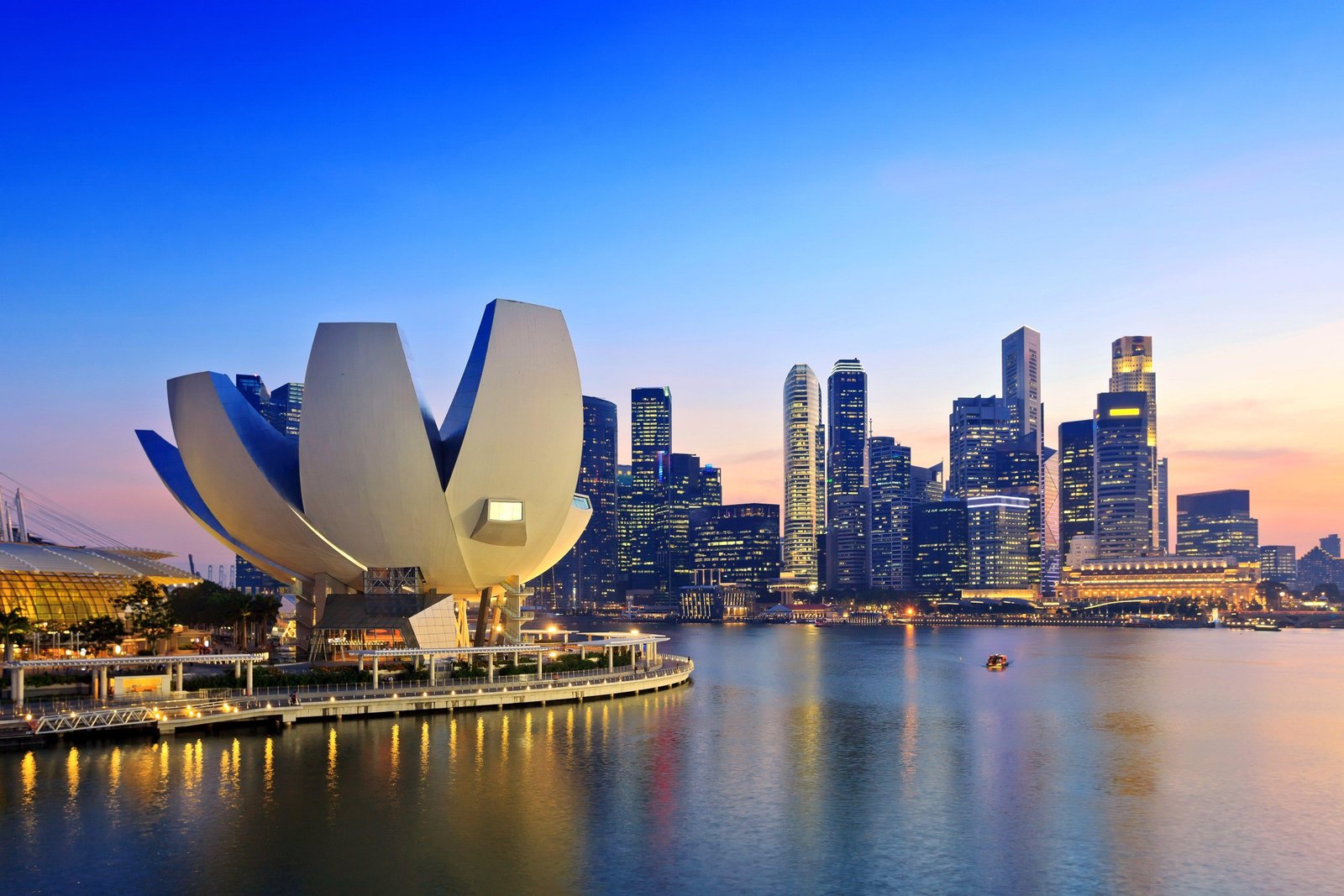
Why Study in Singapore?
Singapore is a major education, business, technology, and financial hub in Asia,
offering a range of universities, polytechnics, arts institutions,
specialized institutions, and private education institutions.
International students can pursue diploma, bachelor's, master's, doctoral, and specialized programs across fields such as technology, engineering, business, finance, hospitality, life sciences, arts, design, and many others.
Singapore's higher education landscape includes autonomous universities, practice-oriented polytechnics, specialized institutions, and international education providers, offering students a variety of academic and career-focused study pathways.
International students can pursue diploma, bachelor's, master's, doctoral, and specialized programs across fields such as technology, engineering, business, finance, hospitality, life sciences, arts, design, and many others.
Singapore's higher education landscape includes autonomous universities, practice-oriented polytechnics, specialized institutions, and international education providers, offering students a variety of academic and career-focused study pathways.
🎓
Diverse Study Options
Students can choose from autonomous universities,
polytechnics, arts institutions, specialized institutions,
and eligible private education institutions.
💼
Practice-Based Learning
Many Singapore programs combine academic study with
practical learning, industry exposure, internships,
projects, and career-focused education.
🌏
International Environment
Singapore provides an international environment
within one of Asia's major centers for business,
finance, technology, transportation, and education.
Popular Majors & Career Paths
• Computer Science & Technology:
Computer science, artificial intelligence, data analytics,
cybersecurity, software engineering, information systems,
and digital technologies.
• Engineering: Electrical, mechanical, civil, computer, aerospace, biomedical, and other engineering disciplines.
• Business & Finance: Business administration, finance, accounting, marketing, entrepreneurship, economics, international business, and supply chain management.
• Hospitality & Tourism: Hospitality management, tourism, events, hotel management, and related service-sector programs.
• Life Sciences & Healthcare: Biomedical science, biotechnology, health sciences, life sciences, and related disciplines.
• Arts, Design & Media: Fine arts, animation, communication, digital media, fashion, design, performing arts, and arts management.
• Engineering: Electrical, mechanical, civil, computer, aerospace, biomedical, and other engineering disciplines.
• Business & Finance: Business administration, finance, accounting, marketing, entrepreneurship, economics, international business, and supply chain management.
• Hospitality & Tourism: Hospitality management, tourism, events, hotel management, and related service-sector programs.
• Life Sciences & Healthcare: Biomedical science, biotechnology, health sciences, life sciences, and related disciplines.
• Arts, Design & Media: Fine arts, animation, communication, digital media, fashion, design, performing arts, and arts management.
Note:
Program availability, professional recognition,
admission requirements, and career pathways vary
according to the institution and program.
Education System & Types of Institutions
Singapore offers several post-secondary and higher education pathways.
• Autonomous Universities: Singapore has six local autonomous universities: National University of Singapore (NUS), Nanyang Technological University (NTU), Singapore Management University (SMU), Singapore Institute of Technology (SIT), Singapore University of Social Sciences (SUSS), and Singapore University of Technology and Design (SUTD).
• Polytechnics: Singapore has five polytechnics: Nanyang Polytechnic, Ngee Ann Polytechnic, Republic Polytechnic, Singapore Polytechnic, and Temasek Polytechnic. Polytechnics provide hands-on, practice-based education and award diplomas in different areas of specialization.
• Institute of Technical Education: ITE provides career and technical education, including Higher Nitec and diploma pathways.
• Arts Institutions: LASALLE College of the Arts and Nanyang Academy of Fine Arts provide specialized arts education and are constituent colleges of the University of the Arts Singapore.
• Private Education Institutions: Singapore also has private education institutions offering diploma, degree pathway, professional, and postgraduate programs.
• Autonomous Universities: Singapore has six local autonomous universities: National University of Singapore (NUS), Nanyang Technological University (NTU), Singapore Management University (SMU), Singapore Institute of Technology (SIT), Singapore University of Social Sciences (SUSS), and Singapore University of Technology and Design (SUTD).
• Polytechnics: Singapore has five polytechnics: Nanyang Polytechnic, Ngee Ann Polytechnic, Republic Polytechnic, Singapore Polytechnic, and Temasek Polytechnic. Polytechnics provide hands-on, practice-based education and award diplomas in different areas of specialization.
• Institute of Technical Education: ITE provides career and technical education, including Higher Nitec and diploma pathways.
• Arts Institutions: LASALLE College of the Arts and Nanyang Academy of Fine Arts provide specialized arts education and are constituent colleges of the University of the Arts Singapore.
• Private Education Institutions: Singapore also has private education institutions offering diploma, degree pathway, professional, and postgraduate programs.
Important for International Students:
Students who require a Student's Pass should confirm that
their chosen institution and full-time course are eligible
for Student's Pass purposes.
Tuition Fees & Study Costs
Tuition fees in Singapore vary according to the institution,
program, qualification level, duration, and applicable subsidies.
Polytechnics
Tuition depends on the student's status, program, and applicable tuition arrangements.
Tuition depends on the student's status, program, and applicable tuition arrangements.
Universities
Undergraduate tuition varies significantly by university, degree, and program.
Undergraduate tuition varies significantly by university, degree, and program.
Private Institutions
Fees vary by provider, qualification, awarding institution, and program duration.
Fees vary by provider, qualification, awarding institution, and program duration.
Important:
Students should confirm current tuition,
compulsory fees, insurance, accommodation,
and other costs directly with their institution.
Admission Requirements for International Students
Admission requirements vary by institution and program.
General requirements may include:
Undergraduate / Bachelor's
• Recognized secondary / high school qualification
• Academic transcripts and certificates
• Required academic subjects or grades
• English-language proficiency where required
• Institution-specific admission tests where applicable
• Personal statement where required
• Interview for selected programs
• Portfolio or audition for selected arts programs
• Recognized secondary / high school qualification
• Academic transcripts and certificates
• Required academic subjects or grades
• English-language proficiency where required
• Institution-specific admission tests where applicable
• Personal statement where required
• Interview for selected programs
• Portfolio or audition for selected arts programs
Postgraduate / Master's
• Recognized bachelor's degree or equivalent
• Academic transcripts and degree certificate
• Required academic background
• English-language proficiency where required
• CV / résumé where required
• Statement of Purpose where required
• Recommendation letters where required
• Professional experience for selected programs
• GRE / GMAT or other tests where required
• Recognized bachelor's degree or equivalent
• Academic transcripts and degree certificate
• Required academic background
• English-language proficiency where required
• CV / résumé where required
• Statement of Purpose where required
• Recommendation letters where required
• Professional experience for selected programs
• GRE / GMAT or other tests where required
English Language Requirements
English-language requirements are determined by each institution
and program.
Exact accepted tests, minimum scores, and exemption policies vary by institution and program.
IELTS Academic
Accepted by many institutions and programs.
Accepted by many institutions and programs.
TOEFL
Accepted by many Singapore institutions.
Accepted by many Singapore institutions.
Other Evidence
Institutions may accept other approved evidence of English proficiency.
Institutions may accept other approved evidence of English proficiency.
Exact accepted tests, minimum scores, and exemption policies vary by institution and program.
Singapore Application Intake Periods
Singapore does not have one universal intake schedule
for every institution and program.
Students should always confirm the exact application deadline and course commencement date directly with the institution.
Universities
Application periods and academic start dates are determined by each university and program.
Application periods and academic start dates are determined by each university and program.
Polytechnics
Admission exercises and deadlines depend on the applicant category and admission route.
Admission exercises and deadlines depend on the applicant category and admission route.
Private Institutions
Selected private institutions may offer multiple program commencement dates during the year.
Selected private institutions may offer multiple program commencement dates during the year.
Students should always confirm the exact application deadline and course commencement date directly with the institution.
Documents Checklist for Singapore Applications
Academic & Identity
• Valid passport
• Academic transcripts
• Academic certificates / degree certificates
• English-language results where required
• Other admission-test results where required
• Recent photograph where required
• Valid passport
• Academic transcripts
• Academic certificates / degree certificates
• English-language results where required
• Other admission-test results where required
• Recent photograph where required
Supporting Documents
• CV / résumé where required
• Personal statement / Statement of Purpose
• Recommendation letters where required
• Portfolio for selected arts / design programs
• Employment evidence for selected programs
• CV / résumé where required
• Personal statement / Statement of Purpose
• Recommendation letters where required
• Portfolio for selected arts / design programs
• Employment evidence for selected programs
Student's Pass
• Registration Acknowledgement Letter where applicable
• Passport biodata information
• Educational background information
• Employment history where applicable
• Financial-support information
• Singapore contact / residential details
• Recent digital colour photograph
• Registration Acknowledgement Letter where applicable
• Passport biodata information
• Educational background information
• Employment history where applicable
• Financial-support information
• Singapore contact / residential details
• Recent digital colour photograph
ICA or the institution may request additional documentation depending on the applicant and institution type.
Scholarship Opportunities
• University Scholarships:
Selected universities offer scholarships to qualifying
international students based on their own eligibility criteria.
• Merit-Based Awards: Selected institutions may provide awards based on academic performance and other achievements.
• Research Scholarships: Funding may be available for eligible master's, doctoral, and research students.
• Institutional Financial Support: Financial assistance and funding arrangements vary by institution, citizenship, and program.
Scholarship availability, eligibility, deadlines, and award values vary significantly.
• Merit-Based Awards: Selected institutions may provide awards based on academic performance and other achievements.
• Research Scholarships: Funding may be available for eligible master's, doctoral, and research students.
• Institutional Financial Support: Financial assistance and funding arrangements vary by institution, citizenship, and program.
Scholarship availability, eligibility, deadlines, and award values vary significantly.
Singapore Student's Pass
Foreign students accepted into an approved
full-time course in Singapore
generally need to obtain a Student's Pass,
unless an applicable exemption applies.
Student's Pass applications are administered by the Immigration & Checkpoints Authority (ICA).
Student's Pass applications are administered by the Immigration & Checkpoints Authority (ICA).
Important:
Part-time courses and courses conducted only
in the evening or on weekends are not eligible
for a Student's Pass.
Singapore Student's Pass Process
1. Receive admission
to an eligible full-time course in Singapore.
2. Complete institution registration and obtain the information required to begin the Student's Pass process.
3. Prepare required information and documents including passport, educational background, financial support information, and other required details.
4. Submit the Student's Pass application through the ICA e-Service according to the requirements for your institution category.
5. Pay the application processing fee. ICA currently charges a non-refundable S$45 processing fee.
6. Receive In-Principle Approval (IPA) if the application is approved.
7. Travel to Singapore according to the applicable entry requirements and instructions in the IPA.
8. Complete Student's Pass formalities including biometrics and other requirements where applicable.
9. Pay issuance fees. ICA currently charges a S$60 Student's Pass issuance fee and a S$30 Multiple Journey Visa fee where applicable.
2. Complete institution registration and obtain the information required to begin the Student's Pass process.
3. Prepare required information and documents including passport, educational background, financial support information, and other required details.
4. Submit the Student's Pass application through the ICA e-Service according to the requirements for your institution category.
5. Pay the application processing fee. ICA currently charges a non-refundable S$45 processing fee.
6. Receive In-Principle Approval (IPA) if the application is approved.
7. Travel to Singapore according to the applicable entry requirements and instructions in the IPA.
8. Complete Student's Pass formalities including biometrics and other requirements where applicable.
9. Pay issuance fees. ICA currently charges a S$60 Student's Pass issuance fee and a S$30 Multiple Journey Visa fee where applicable.
Application Timing:
For Institutes of Higher Learning, ICA states that
Student's Pass applications should be submitted
at least 2 months and not more than 3 months
before the course begins.
Student's Pass Processing Time
Processing times depend on the institution category
and individual application.
Some applications may take longer to process.
Institutes of Higher Learning
ICA states that applications are generally processed within 1 week, or within 2 weeks if a visa is required.
ICA states that applications are generally processed within 1 week, or within 2 weeks if a visa is required.
Private Education Institutions
New applications may take up to 1 month, or generally within 2 weeks for an EduTrust-accredited PEI.
New applications may take up to 1 month, or generally within 2 weeks for an EduTrust-accredited PEI.
Some applications may take longer to process.
Living Costs in Singapore
Living expenses vary depending on accommodation,
location, lifestyle, institution, and personal spending.
Accommodation
Options may include university accommodation, student residences, shared housing, and private accommodation.
Options may include university accommodation, student residences, shared housing, and private accommodation.
Food & Daily Expenses
Costs vary depending on eating habits, location, and lifestyle.
Costs vary depending on eating habits, location, and lifestyle.
Transportation
Students can use Singapore's MRT, bus, and other transportation services.
Students can use Singapore's MRT, bus, and other transportation services.
Personal Expenses
Budget for mobile service, books, study materials, insurance, entertainment, and other expenses.
Budget for mobile service, books, study materials, insurance, entertainment, and other expenses.
Work During Studies
Holding a Singapore Student's Pass does not automatically
allow every international student to work.
Eligibility depends on the Ministry of Manpower requirements
and the institution attended.
During School Term
Eligible full-time Student's Pass holders studying at institutions on MOM's approved list may work up to 16 hours per week without a separate work pass.
Eligible full-time Student's Pass holders studying at institutions on MOM's approved list may work up to 16 hours per week without a separate work pass.
Internship / Industrial Attachment
Eligible students may participate in an industrial attachment or internship conducted by their institution when it contributes toward graduation requirements.
Eligible students may participate in an industrial attachment or internship conducted by their institution when it contributes toward graduation requirements.
During Vacation
Eligible students at institutions specified by MOM may work during official vacation without a separate work pass, subject to MOM conditions.
Eligible students at institutions specified by MOM may work during official vacation without a separate work pass, subject to MOM conditions.
Important:
The 16-hour rule does not apply automatically to
every international student or every institution.
Students should confirm current MOM eligibility
before accepting employment.
Working in Singapore After Graduation
A Student's Pass does not automatically provide
unrestricted post-study employment rights.
Once studies are completed and the Student's Pass expires, a graduate who wants to work in Singapore generally needs the appropriate work authorization.
The employer will normally need to apply for the appropriate work pass where required.
Once studies are completed and the Student's Pass expires, a graduate who wants to work in Singapore generally needs the appropriate work authorization.
The employer will normally need to apply for the appropriate work pass where required.
Popular Study Options in Singapore
Autonomous Universities
Bachelor's, master's, doctoral, professional, and research programs.
Bachelor's, master's, doctoral, professional, and research programs.
Polytechnic Pathways
Practice-oriented diploma programs with applied and industry-based learning.
Practice-oriented diploma programs with applied and industry-based learning.
Private & International Education
Diploma, degree pathway, professional, and postgraduate options offered by eligible institutions.
Diploma, degree pathway, professional, and postgraduate options offered by eligible institutions.
Common Mistakes to Avoid When Applying to Singapore
• Choosing an institution without checking Student's Pass eligibility.
• Assuming every institution has the same academic or English requirements.
• Assuming every Student's Pass holder can automatically work 16 hours per week.
• Starting employment without confirming Ministry of Manpower eligibility.
• Applying too late for the Student's Pass.
• Using outdated tuition or program information.
• Not budgeting adequately for accommodation and living expenses.
• Assuming admission automatically guarantees Student's Pass approval or entry into Singapore.
• Not checking program-specific academic prerequisites.
• Assuming every institution has the same academic or English requirements.
• Assuming every Student's Pass holder can automatically work 16 hours per week.
• Starting employment without confirming Ministry of Manpower eligibility.
• Applying too late for the Student's Pass.
• Using outdated tuition or program information.
• Not budgeting adequately for accommodation and living expenses.
• Assuming admission automatically guarantees Student's Pass approval or entry into Singapore.
• Not checking program-specific academic prerequisites.
How to Apply to Study in Singapore with Education Valley
•
Contact Education Valley
– Share your academic background, study goals,
preferred major, intake, and budget.
• Choose Your Program & Institution – Select suitable Singapore universities, polytechnics, or other eligible institutions.
• Check Entry Requirements – Confirm academic, English, and program-specific requirements.
• Prepare Documents – Organize academic records, passport, English results, personal statements, references, and other required documents.
• Submit Applications – Apply to suitable Singapore institutions according to their application procedures.
• Receive Admission – Review your offer and complete any outstanding admission conditions.
• Apply for Your Student's Pass – Complete the institution and ICA Student's Pass procedures.
• Receive IPA & Prepare for Travel – Review the In-Principle Approval and complete required pre-arrival procedures.
• Travel to Singapore – Follow applicable immigration and institution arrival requirements.
• Complete Student's Pass Formalities – Complete biometrics and other required procedures after arrival where applicable.
Education Valley supports students throughout their Singapore study journey, from institution and program selection to application support, Student's Pass guidance, and pre-departure preparation.
• Choose Your Program & Institution – Select suitable Singapore universities, polytechnics, or other eligible institutions.
• Check Entry Requirements – Confirm academic, English, and program-specific requirements.
• Prepare Documents – Organize academic records, passport, English results, personal statements, references, and other required documents.
• Submit Applications – Apply to suitable Singapore institutions according to their application procedures.
• Receive Admission – Review your offer and complete any outstanding admission conditions.
• Apply for Your Student's Pass – Complete the institution and ICA Student's Pass procedures.
• Receive IPA & Prepare for Travel – Review the In-Principle Approval and complete required pre-arrival procedures.
• Travel to Singapore – Follow applicable immigration and institution arrival requirements.
• Complete Student's Pass Formalities – Complete biometrics and other required procedures after arrival where applicable.
Education Valley supports students throughout their Singapore study journey, from institution and program selection to application support, Student's Pass guidance, and pre-departure preparation.
After You Arrive in Singapore – What to Do Next?
• Complete institution registration and orientation.
• Complete outstanding Student's Pass formalities where required.
• Complete biometrics according to ICA or institution instructions where applicable.
• Confirm your Singapore accommodation and contact details.
• Obtain your student identification and activate institution systems.
• Arrange banking and mobile services if required.
• Familiarize yourself with Singapore's MRT and public transportation system.
• Understand Student's Pass employment restrictions before accepting any job.
• Confirm with your institution and MOM before beginning employment or an internship where necessary.
• Keep your passport, Student's Pass, and immigration records secure and up to date.
• Follow your institution and ICA requirements throughout your studies.
• Complete outstanding Student's Pass formalities where required.
• Complete biometrics according to ICA or institution instructions where applicable.
• Confirm your Singapore accommodation and contact details.
• Obtain your student identification and activate institution systems.
• Arrange banking and mobile services if required.
• Familiarize yourself with Singapore's MRT and public transportation system.
• Understand Student's Pass employment restrictions before accepting any job.
• Confirm with your institution and MOM before beginning employment or an internship where necessary.
• Keep your passport, Student's Pass, and immigration records secure and up to date.
• Follow your institution and ICA requirements throughout your studies.